Kurash
A traditional wrestling sport of Central Asian origin, contested standing and in jackets, which aims to throw the opponent onto their back with a controlled throw.
- 75news and announcements
- 1rule and regulation documents
- 8categories and disciplines
What is Kurash?
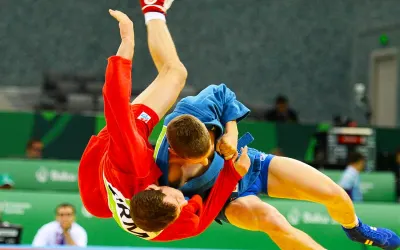
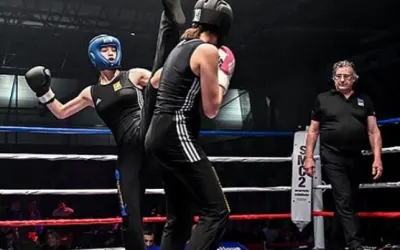
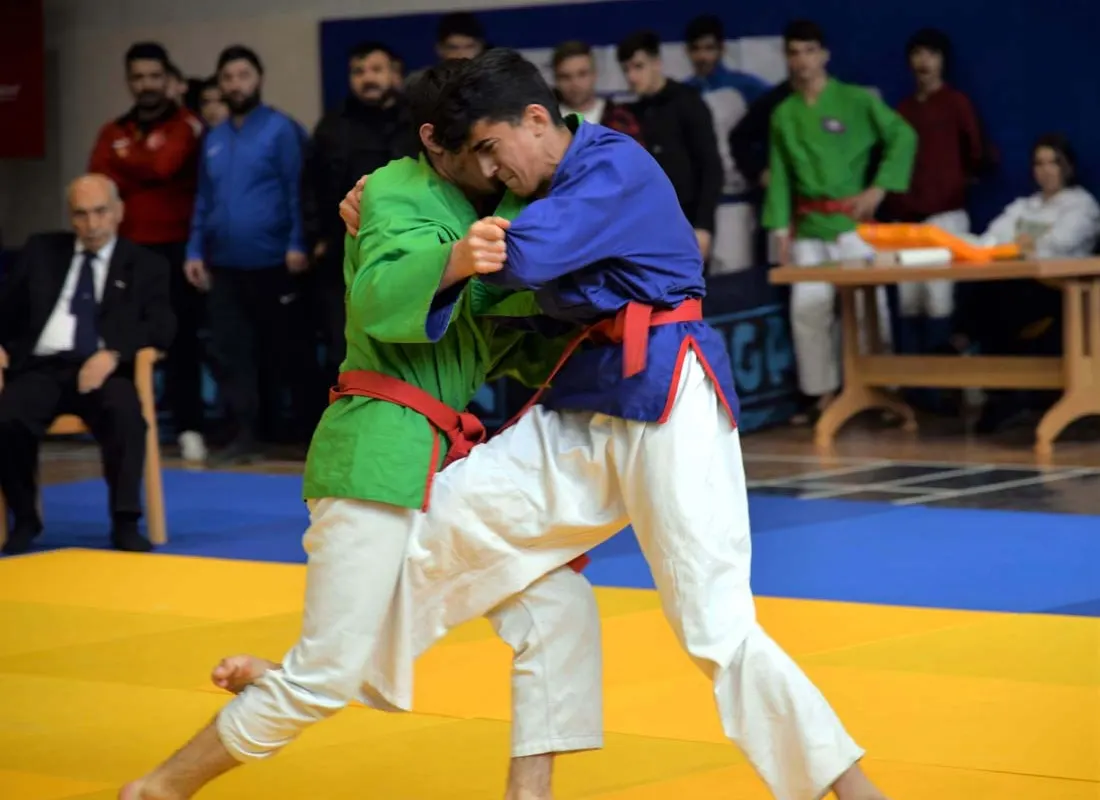
Kurash is a traditional wrestling sport contested standing and in jackets, with its origins in the lands of present-day Uzbekistan. Athletes compete barefoot, wearing a blue or green jacket called a yaktak, white trousers and a red belt. The aim is to throw the opponent onto their back with a throw combining speed, strength and control. A full throw executed in this way is scored as Halal (Halol) and ends the bout immediately. Bouts are held according to age and weight categories.
In kurash, holding the opponent's trousers, kicking, and techniques such as chokes and arm locks are prohibited; the contest is conducted standing, with jacket and belt grips. Scoring is based on three evaluations, Halal, Yonbosh and Chala, and penalties on three stages, Tanbeh, Dakki and G'irrom. Bouts begin with a bow called Ta'zim. With its simple rules, its tradition founded on respect and its spectacular throws, kurash appeals to a broad range of athletes, from young children to adults.
History
Kurash is a wrestling tradition that emerged in the lands of present-day Uzbekistan and, according to research, is said to have a history of at least 3,500 years. Kurash was reorganised with modern sporting rules, weight categories and a fixed bout duration, and its international governing body, the International Kurash Association (IKA), was founded in Tashkent on 6 September 1998 by representatives of 28 countries. The Olympic Council of Asia recognised kurash on 24 January 2003; the branch featured as a demonstration sport at the 2006 Doha Asian Games and entered the programme at the 2018 Asian Games. Today the IKA brings together 140 national kurash federations.
In Türkiye, kurash is one of the branches operating under the Turkish Federation of Developing Sports Branches. The Federation organises individual and team Turkish championships in the minis, cadets, youth, juniors and seniors categories, and runs referee and coach training courses as well as licence renewal and development seminars for the branch. Our kurash national teams represent our country at European and World championships.
Basic Rules
For general information only; competitions are governed by the federation's current rulebook and regulations.
-
01
Halal (Halol)
Throwing the opponent onto their back with a controlled, powerful and fast throw scores Halal and ends the bout. Two Yonbosh also count as Halal.
-
02
Yonbosh and Chala
Yonbosh is awarded for powerful, sharp throws in which the opponent lands on their side. Chala is awarded for technically incomplete throws in which the opponent lands on the hip or stomach; Chala scores do not accumulate into a higher score.
-
03
Penalties
Tanbeh is given for a first minor violation, Dakki for a moderate violation or following a Tanbeh, and G'irrom for a serious violation or following a Dakki. G'irrom means disqualification, and the opponent wins by Halal.
-
04
Prohibited actions
Holding the opponent's trousers, deliberately kicking or striking, chokes, arm locks, bending the fingers backwards, remaining on the defensive for a long time without attacking, and making false attacks are penalised.
-
05
Conduct of the bout
The bout begins with a bow called Ta'zim. The athlete called first wears a blue yaktak and the athlete called second a green one. The bout is stopped at the referee's command "Tokhta".
Field and Equipment
- MatThe competition mat measures at least 10 × 10 m and at most 16 × 16 m; the contest area is surrounded by a safety zone 3 m wide.
- YaktakThe kurash jacket, navy (dark blue) or green in colour, ending 15–20 cm above the knee.
- Trousers and beltWhite trousers and a red belt 4–5 cm wide are used.
- OtherAthletes compete barefoot; female athletes wear a white sports T-shirt under the yaktak. Athletes may not compete wearing hard or dangerous items.
Categories and Disciplines
- Minis
- Cadets
- Youth
- Juniors
- Seniors
- Teams (men and women)
- Senior men (IKA): -60, -66, -73, -81, -90, -100, -120, +120 kg
- Senior women (IKA): -48, -52, -57, -63, -70, -78, -87, +87 kg
Age groups and weight classes may change with seasonal regulations; see the sport documents for current information.
Kurash in Türkiye
In kurash, our Federation organises Turkish championships in the minis, cadets, youth, juniors and seniors categories, as well as team Turkish championships in the cadets and seniors categories. Candidate referee courses, referee promotion and licence renewal seminars, coach development and licence renewal seminars, and Level 1 Assistant Coach Training Courses are held in the branch.
Our kurash national teams have achieved notable success on the international stage. At the Kurash European Championship held in Batumi, Georgia, in April 2025, with 19 countries and 254 athletes taking part, our country competed with 58 athletes and won a total of 48 medals. At the Kurash European Championship held in September 2026, 12 medals were won in the seniors category: 7 gold, 3 silver and 2 bronze. At the Youth-Juniors Kurash World Championship held in Ulaanbaatar, Mongolia, in December 2024, third place in the country rankings was achieved with 1 gold, 1 silver and 4 bronze medals.
- Championships and leaguesNational championships and events across age categories
- Referee and coach coursesCandidate referee, promotion and coaching courses
- National team workPreparation camps for international events
Kurash 2024 Referee Licence Renewal Seminar Referee List
Live Broadcasting of Competitions
PLEASE VISIT turnuva.kurash.org.tr FOR LIVE BROADCASTING OF THE COMPETITIONS
Rules, Regulations and Documents
Frequently Asked Questions
Key information on getting started in Kurash, licences, refereeing and coaching.
Who can take up kurash?
As kurash has age and weight categories starting from the minis age group, children, young people and adults can take up the branch. To start, it is sufficient to apply to a sports club active in kurash.
How is a licence obtained?
The athlete licence is obtained through the club with which you are registered, via the Ministry of Youth and Sports Sports Information System (SBS) (sbs.gsb.gov.tr).
How do I become a kurash referee?
Those who successfully complete the Kurash Candidate Referee Course organised by our Federation become candidate referees. To officiate at competitions, referees must complete their licence renewal procedures; promotion in grade is achieved through a referee promotion course and examination.
What is required to become a kurash coach?
Coaching begins with the Level 1 Assistant Coach Training Course. In line with the coach training regulations, applications require a criminal record certificate and a Basic Training examination result or exemption certificate.
Latest News
 Announcements
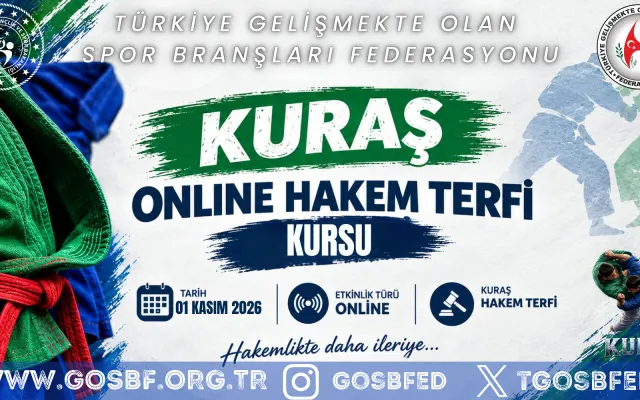
31 October 2026 Kurash Online Referee Promotion Course and Examination